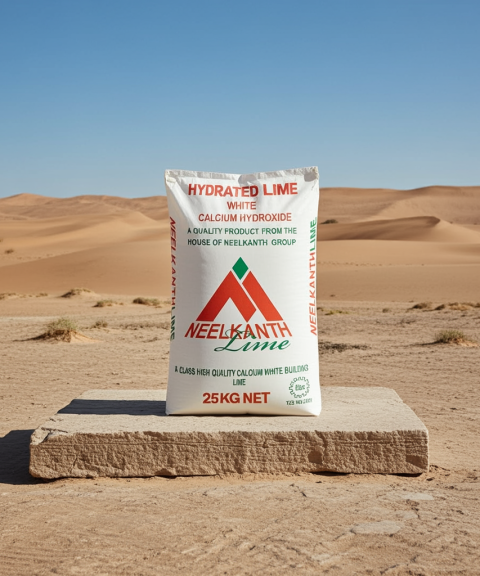
Description
Quick Lime, also known as Calcium Oxide (CaO), is a highly reactive calcium-based material produced by heating limestone at high temperatures to remove carbon dioxide. It is widely used in industrial processing, mining, water and wastewater treatment, steel manufacturing, construction, and selected agricultural applications. Quick Lime reacts with water to form hydrated lime and releases considerable heat during the process.
Chemical Analysis
- Calcium Oxide (CaO): Commercial-grade quick lime typically contains approximately 85% to 95% CaO or higher, depending on the grade and manufacturing process.
- Available Calcium Oxide: The available CaO content indicates the portion capable of participating in chemical reactions and is an important measure of product quality.
- Magnesium Oxide (MgO): Content varies depending on the limestone source and may range from low levels to several percent or more.
- Carbon Dioxide (CO₂): Residual CO₂ may be present as a result of incomplete calcination or the presence of unconverted calcium carbonate.
- Impurities: May include silica, alumina, iron oxides, and other mineral residues, depending on the raw material and production process.
Note: Actual chemical composition varies by supplier and grade. Refer to the product’s Certificate of Analysis (COA) for confirmed specifications.
Key Characteristics
- High Reactivity: Quick Lime reacts readily with water and acidic substances, making it useful in various industrial and chemical processes.
- Exothermic Reaction: When mixed with water, it releases significant heat and forms calcium hydroxide, also known as hydrated lime.
- Strong Alkalinity: It produces highly alkaline conditions when it reacts with water, making it effective for neutralization and pH adjustment.
- Low Water Solubility: Quick Lime does not simply dissolve in water; instead, it reacts chemically with water to form hydrated lime.
- Moisture Sensitivity: It readily absorbs moisture and carbon dioxide from the air, so it must be stored in dry, moisture-resistant packaging.
Major Uses & Applications
- Mining and Mineral Processing: Used for pH control, neutralization of acidic process streams, and selected gold-processing and mineral-treatment applications.
- Water and Wastewater Treatment: Used to adjust pH, neutralize acidic water, support contaminant removal, and assist in sludge treatment.
- Steel and Metallurgical Industries: Used as a flux to help remove impurities during steelmaking and other metallurgical processes.
- Chemical Manufacturing: Serves as a raw material in the production of calcium-based chemicals and other industrial compounds.
- Construction and Building Materials: Used in selected applications involving lime-based products, soil stabilization, and construction materials.
- Sugar Processing: Used in sugar clarification and purification processes to help remove impurities.
- Industrial Effluent Treatment: Helps neutralize acidic industrial wastewater and adjust process pH.
- Agriculture and Soil Treatment: Can be used in controlled soil-treatment applications where rapid chemical reactivity is required. However, agricultural use requires careful assessment of soil conditions, application rates, and product suitability.
Handling and Storage
Quick Lime is a caustic, moisture-reactive material that can cause severe skin and eye burns. Contact with water generates heat, which can cause splashing. Store in a cool, dry, well-ventilated area in tightly sealed, moisture-resistant packaging. Use appropriate protective gloves, eye protection, and respiratory protection where dust exposure is possible. Always consult the product Safety Data Sheet (SDS) before handling.